Circuit register
Six connected, none closed
What the desk watches
A circuit is a beat the desk monitors on a schedule. Six are connected overnight. Each one has a state, a cadence and a written note for the shift, and none of them depends on a story being published that day.
The register below is the public version of the board. It is useful in two directions: a reader can see whether a question belongs to a circuit, and a source can see what the desk already checks before sending a document.
01
Trade lanes
Hourly, 22:00 to 06:00
This circuit follows freight that moves by road: what is in the trailer, which broker filed it, which tariff line it lands under and where the hold was entered. Most holds are clerical. A certificate with the wrong port of export, a weight that does not match the axle scale, a shipper name that changed after the filing was made.
The desk reads broker filings and carrier notices, then checks the queue at the crossing against them. When a hold repeats across several loads on the same day, the item names the broker, the form and the error, because a single bad document is a delay and a pattern is a systems problem.
02
Ports of entry
Twice per shift
Lanes, hours, booths and the people working them. This circuit covers the physical capacity of a crossing: how many lanes are open, whether the commercial bay is staffed, and what happens to the queue when one booth closes for a shift change.
The desk counts and photographs rather than estimating. A lane count at two in the morning is evidence. An estimate texted from a car is not, and the desk keeps the difference visible in the item.
03
Rail
Per shift, with a daily interchange report
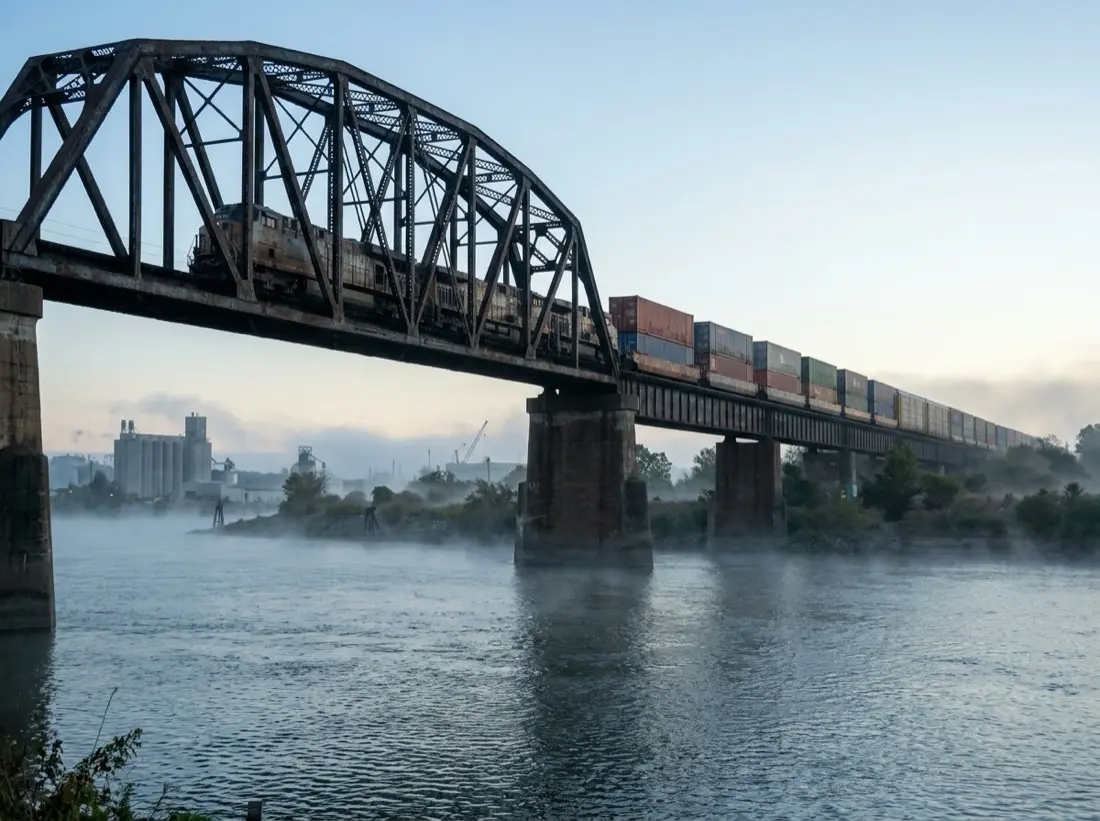
Class one manifests, interchange yards, short line connections and the automotive parts that ride them. Rail moves a large share of the freight that never appears in a truck queue, so a blocked spur shows up days later as a shortage somewhere else.
The desk reads interchange reports, tracks dwell time at the yards nearest the line, and follows the short lines that feed them. When a yard holds cars for inspection, the item explains who is waiting on the other end.
04
Water
Twice per shift, daily in flood season
Lake levels, river gauges, lock schedules and intake protection. The Great Lakes carry freight, drinking water and a standing argument about diversion, and all three show up in the same gauge reading.
Readings are taken from the gauges the desk can reach on foot and checked against the published record. When the two disagree, both go in the note. A four centimetre move is small until it is multiplied by the fetch across the lake.
05
Energy
Per shift
Interties, pipeline permits and the price spread that decides which direction power flows overnight. This circuit is about capacity and rates, not announcements, and it is the circuit most likely to produce a number that changes a municipal budget.
The desk tracks intertie load against the posted schedule and reads permit filings for the crossings that carry pipelines. Where a utility will not publish a figure, the note says which figure is missing.
06
Towns on the line
Daily
Council agendas, school boards, border strip retail, volunteer fire departments and the leases that decide who maintains a parking lot. This circuit exists because most border coverage treats the line as a national story and the towns as scenery.
The desk reads agendas before the meetings and follows up on the items that touch a crossing, a dock or a road that both sides use. Small decisions here tend to have long, quiet consequences.
Work a crossing, a yard or a plant on the line? The contact desk takes documents, corrections and tips, and it answers on the record.
Contact the desk